From Scattered Information to a Well-Prepared Consultation
Practice at the Gastroenterology and Hepatology Outpatient Clinic
- High patient volume due to an aging population and lifestyle factors
- Long wait times and limited capacity
- A growing number of complex patient profiles
- Polypharmacy and Comorbidity
- Fragmented Referral Information
- Time-consuming triage due to limited information
- Emergency patients disrupt the schedule
- Unnecessary follow-up visits for chronic patients
- Extended nursing intake consultations
This puts patient-centered care under pressure.
Consultation Preparation and Triage Support with ConsultAssistent
- Patient Information Collected in a Standardized Manner in Advance
- Triage is being better supported
- The intake process is structured and comprehensive
- The consultation begins with a comprehensive patient profile
- The consultation gets to the heart of the matter more quickly
- Use Follow-Up Appointments in a More Targeted Way
- Less Administrative Work Thanks to AI Summaries
- Remote Patient Monitoring
- Data for Research and Decision Support
Learn more about ConsultAssistent's digital medical history form.
Initial complaints in the MDL automotive medical history module
The MDL medical history module is available to the entire patient population and supports, among other things:
Abdominal symptoms
- Abdominal Pain and Dyspepsia
- Epigastric Pain and Reflux
Gastrointestinal Bleeding
- Hematochezia
- Melena
Bowel Movement Disorders
- Constipation
- Diarrhea
- Fecal incontinence
Liver and Gallbladder Problems
- Jaundice
- Abnormal liver function test results
Systemic symptoms
- Weight Loss
- Anemia
Other complaints
- Infection-related symptoms (e.g., hepatitis)
- Abnormal test results
The questionnaire structure adapts to each complaint and patient profile: thanks to smart decision logic, patients answer only the questions that are relevant to them.
Digital Medical History Form for Gastroenterology
Gastroenterology patients often have multiple symptoms at the same time, and there is frequently a combination of medication use and comorbidities. Digital self-reported medical history helps to document this complexity in a structured manner. Patients fill out information in advance about symptoms such as abdominal pain, bleeding, or bowel movement problems. Medication use is assessed in a structured manner, as are the patient’s gastroenterology history and family medical history. Warning signs are identified, as are the VAS scores for symptom severity.
This provides a comprehensive picture of the pattern of symptoms, their severity and progression, risk factors, and the patient’s request for care. The data is automatically processed into a structured report in the EHR, supplemented by an AI summary for use during the consultation. The healthcare provider reviews the AI summary and remains responsible for documentation and decision-making.
The Gastroenterology Care Pathway
ConsultAssistent supports the care pathway before, during, and after the consultation.
Before the consultation
The patient fills out the self-assessment form in advance. This provides insight into complaints, symptom severity (VAS scores), medication use, and potential warning signs, which aids in triage, scheduling, and consultation preparation.

During the consultation
The gastroenterologist has a structured overview of:
- Symptoms and Course of the Disease
- Medication
- Background
- Risk Profile
The patient's responses are clearly presented in a report. In addition, an AI summary is available that can be used immediately during the consultation. The healthcare provider reviews the AI summary and remains responsible for documentation and decision-making.

After the consultation
Follow-up and outcome measurements are used to monitor the progression of symptoms and treatment, for example, in cases of chronic intestinal diseases. This data is displayed in dashboards.

Curious about how this works in your gastroenterology practice?
Demo request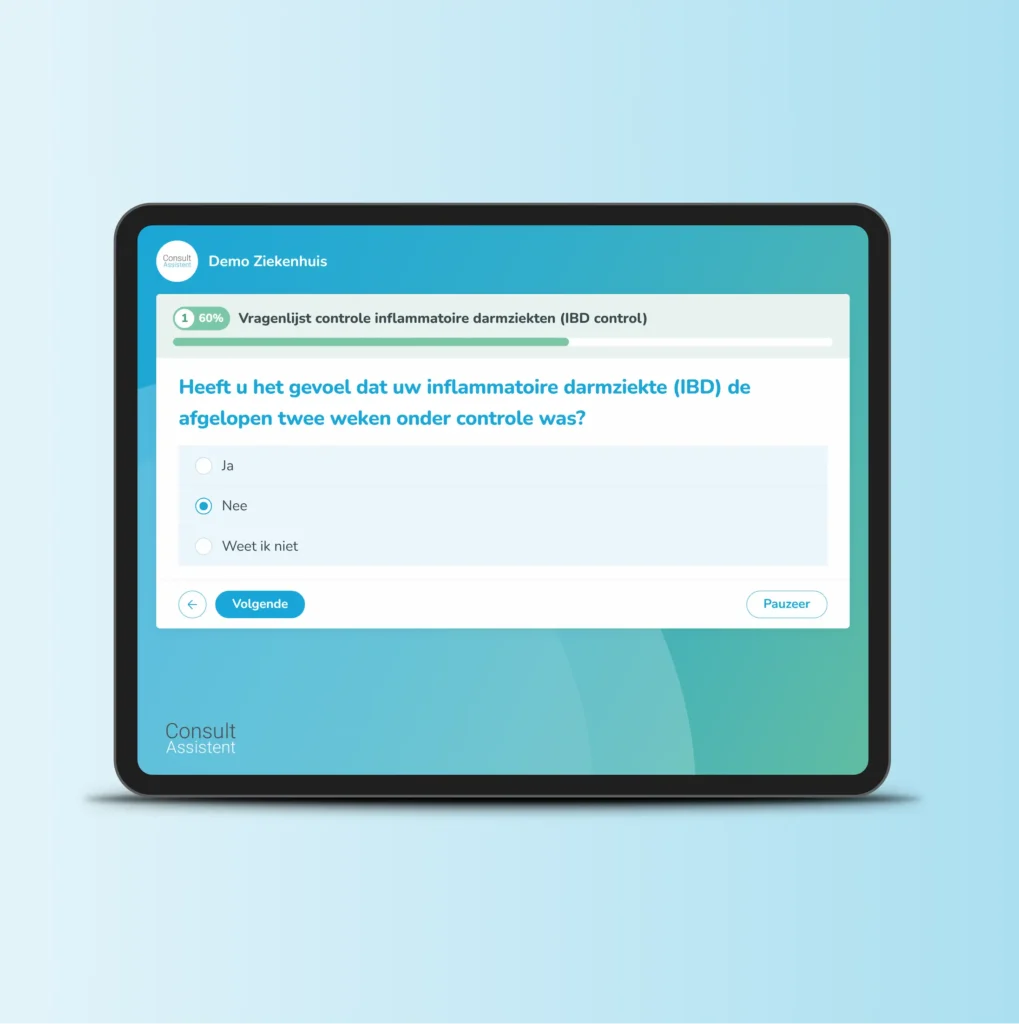
PROMs and Outcome Measures
within Gastroenterology
The MDL module includes the following features:
- Irritable Bowel Syndrome Severity Scoring System (IBS-SSS)
- Quality of Life in Inflammatory Bowel Diseases (ICHOM)
- Colorectal Cancer Surgery (DICA)
Is your preferred PROM questionnaire not listed here? If not, we can easily add it. The PROM questionnaires can be integrated into the automated medical history or follow-up process, but they can also be sent separately at the right time—for example, before, during, and after treatments. This way, you’ll always gather the right insights at the moments that really matter.
Understanding Patient Data and Decision-Making
The collected data is automatically processed into structured reports in the EPD, as well as into clear dashboards that provide insight into complaints and outcomes.
This makes it possible to monitor patients more effectively, identify trends, and support decision-making with data. Within gastroenterology, this results in a better understanding of complex patient profiles and treatment outcomes and contributes to improving the quality of care.
How does this benefit gastroenterology practices?
- Spend less time on routine questions
- More Efficient Triage and Patient Consultations
- A Better Understanding of Complex Patient Profiles
- Use Follow-Up Appointments in a More Targeted Way
- Better Utilization of Specialized Capacity
- Greater insight into outcomes

Frequently Asked Questions About the MDL Module
How does digital medical history-taking help during gastroenterology consultations?
Patient information is collected and organized in advance, allowing consultations to begin immediately with a complete picture of the patient's condition.
Can digital patient history help with triage in gastroenterology?
Yes, because symptoms and risk factors are known in advance, it is easier to determine which patients should be prioritized.
What gastrointestinal symptoms can be asked about?
The automated medical history tool for gastroenterology is available to the entire patient population and includes, among other things, abdominal pain, reflux, blood loss, bowel problems, liver symptoms, and weight loss as presenting symptoms.
How are PROMs used in gastroenterology?
PROMs are used to measure symptoms and outcomes before, during, and/or after treatment and during follow-up.
Get in touch
Curious about how ConsultAssistent can help with consultation preparation in your gastroenterology department? Give us a call or send us an email. We’d be happy to work with you to develop your care pathway and workflow.