PERSONALIZED FOLLOW-UP
Track symptoms and recovery after the initial consultation
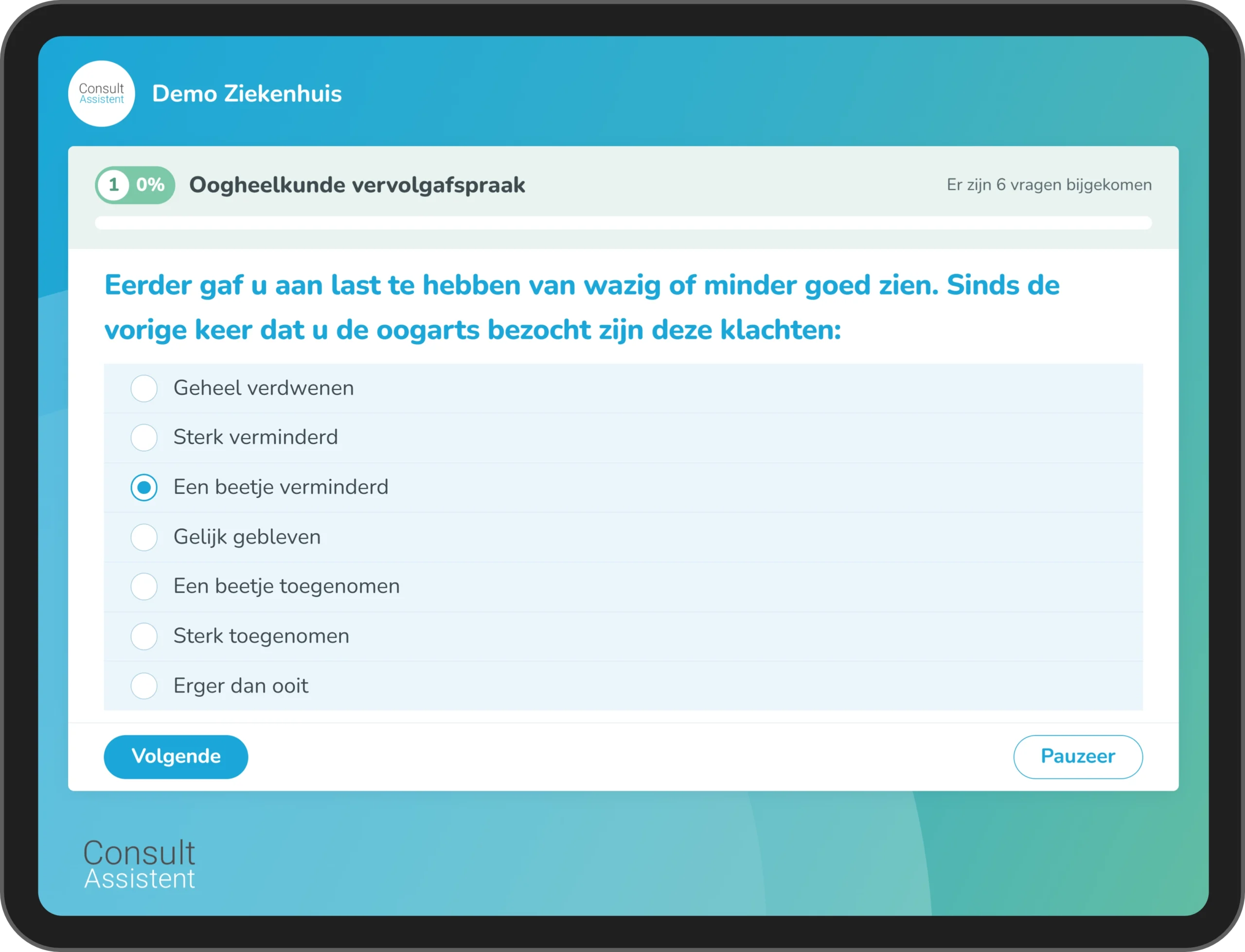
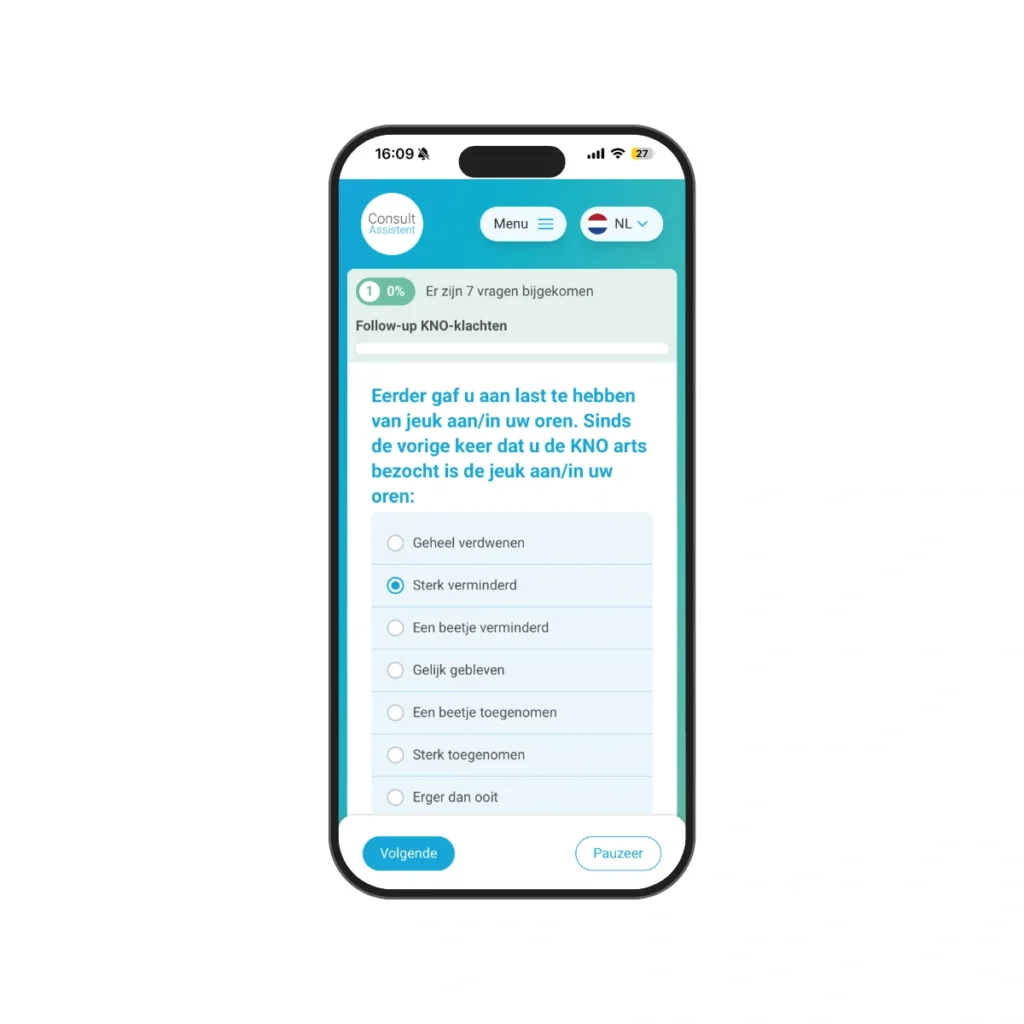
For each follow-up visit, the care team wants to know what has changed since the last contact. After the digital auto-anamnesis, patients answer follow-up questions about their symptoms, recovery, and functioning at agreed times. This happens before a follow-up visit or at set intervals during a longer care process. Over time, this builds a clear picture of the patient's progress and the effect of treatment.
Identify in a timely manner when action is needed
Before a follow-up visit, patients answer questions about their current symptoms, recovery, and functioning. Healthcare providers use these answers to:
- Identify changes in symptoms in a timely manner
- Support triage and prioritization
- Assess the need for a follow-up visit
- Monitor patients remotely
AI-supported decision support is developing rapidly and will help healthcare providers to:
- Predict care needs
- Recognize patterns in symptoms
- Support treatment decisions
The healthcare provider reviews the results and remains responsible for the decision.
What are the benefits of digital follow-up for healthcare providers?
- Gain up-to-date insight into symptoms and recovery
- Track the effect of treatments
- Identify changes early
- Better substantiate decisions
- Prepare follow-up visits more effectively
- Align care with the current course of recovery
This allows care teams to use in-person follow-up visits more purposefully, freeing up appointment slots for patients who need one.

Make patient outcomes useful for care improvement and research
Auto-anamnesis and follow-up provide insight into the course and outcomes of treatment, both for individual patients and at the patient-group level. Data can be sent automatically to the healthcare institution's data warehouse, or a secure research database can be used.
FAQ about digital follow-up
What is digital follow-up?
Digital follow-up involves digitally surveying patients at agreed times, such as after treatment or between appointments. This allows healthcare providers to remotely track symptoms, recovery, and functioning, and to have an up-to-date picture of the patient's progress before a follow-up visit.
How does ConsultAssistent support follow-up care?
ConsultAssistent sends follow-up questions at agreed times along the care pathway. The questions build on previous answers, and patients who don't respond automatically receive a reminder. Through the EMR integration, the care team can view the responses within their existing workflow.
Can digital follow-up help make follow-up visits more targeted?
Yes. The healthcare provider uses information about symptoms and recovery to judge whether an in-person follow-up visit is needed. This can free up room for patients who do need one.
How does digital follow-up provide insight into recovery?
By recording symptoms, functioning, and recovery at agreed times, the healthcare provider can see how recovery is progressing and what results the treatment is producing.
How does ConsultAssistent support patients in long-term care and chronic care?
For long-term or chronic care, ConsultAssistent collects data on symptoms, functioning, and treatment at set intervals. The dashboard shows changes over time, so the care team can spot an unusual course and adjust the follow-up plan where needed.
Get in touch
We're glad you're interested in ConsultAssistent. Do you have a question? Please contact us. You can reach us by phone or send us an email. We'd be happy to help you.