Why collect patient information in advance?
When patients provide information in advance, it changes the dynamics of the consultation. Among other things, this results in:
- Better preparation for both patient and healthcare provider
- More Efficient Consultations
- Fewer administrative tasks during and after the consultation
- A better understanding of the patient
- Care processes that are better tailored to each individual situation
More insight before the consultation
A good consultation begins even before the appointment. Because information is available in advance, the conversation in the exam room can get off to a focused start right away. Healthcare providers already have a great deal of valuable information at their disposal, such as:
- The patient's symptoms and request for help
- Relevant background and context
- Risk factors and points of attention
This gives a fuller picture of the patient, even before they enter the exam room.
More efficient use of consultation time
Having information available in advance radically changes how the consultation is structured. Routine questions are already answered and scores already calculated, so the conversation can get to the heart of the matter more quickly. This creates room for what really matters:
- Explaining and discussing the diagnosis
- Joint decision-making
- Personal contact with the patient
This helps consultations run more smoothly and contributes to better use of consultation time.
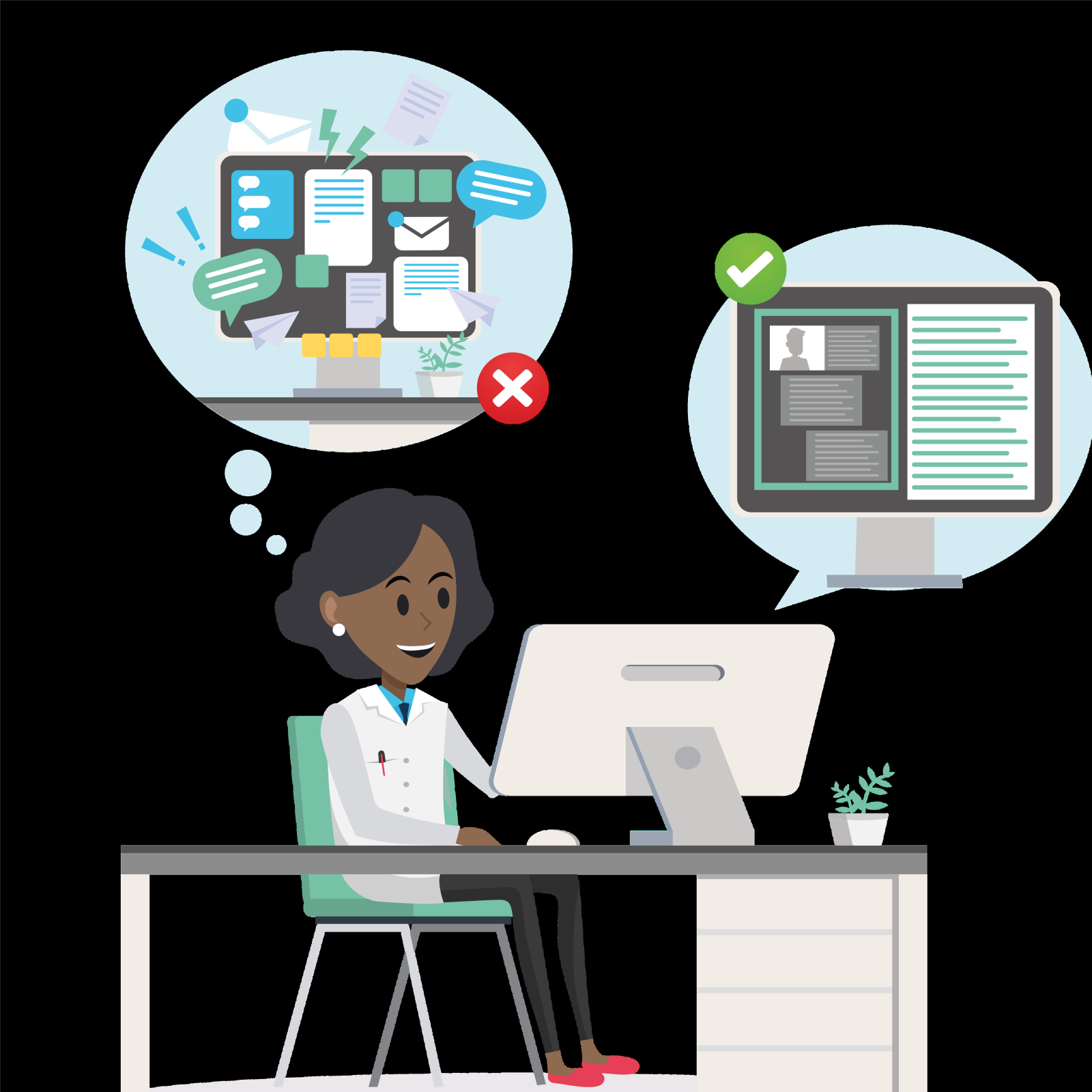
Less administrative burden
Patient information is automatically summarized by AI and added to the electronic medical record (EMR). This removes a large part of the administrative burden:
- No manual entry
- No duplicate registrations
- Minimal post-processing
As a result, healthcare providers have more time for what matters most: the patient.
Better quality through structured data
Structured, uniform recording of information reduces variation in reporting and gives a fuller picture of the patient. Because data is consistently recorded in the same way, patients and treatment outcomes can be compared more easily, and everyone works from the same information during multidisciplinary team meetings (MDTs).
That effect reaches beyond a single consultation:
- Data as a strategic tool for continuous improvement
- Better understanding of treatment results and outcomes by patient group
- Concrete figures to support quality policy
- More efficient organization of care processes, since capacity can be planned more precisely
Insight into outcomes and patient experiences
PROMs and PREMs are valuable, but only when they are collected at the right moment, in a structured way, and can be put to immediate use in care. ConsultAssistent makes this straightforward, giving insight into:
- How symptoms progress and how the patient is functioning
- How care is experienced from the patient's point of view
- Triggers that call for follow-up action
- Results that can directly support the consultation
This information provides a solid foundation for improving care processes.
Curious what collecting patient information in advance could mean for your organization?

The team at ConsultAssistent is flexible, and the software is smart and quick to adapt, which makes working with them a pleasure.
Better follow-up and monitoring of patients
Digital follow-up provides insight into how symptoms develop, including monitoring recovery after treatment, spotting abnormalities, and better planning of follow-up care. Digital follow-up also makes it possible to monitor patients remotely (telemonitoring). This supports digital aftercare and reduces the need for in-person follow-up visits.
Supporting Decision-Making with Data
Collected data becomes valuable once it is translated into insights healthcare providers can act on. ConsultAssistent supports this with:
- Structured reports
- AI-generated summaries ready for the consultation
- Flagged points of attention and deviations
- Dashboards with useful insights
This forms the basis for clinical decision support: care data that actively supports the healthcare provider in making decisions, with the provider always making the final call.

Flexible use across different care pathways
ConsultAssistent can be used across a wide range of medical specialties and care processes. It can be deployed before, during, and after the consultation, adapted to each care pathway, and made available through different communication channels, such as a patient portal or app. This flexibility lets ConsultAssistent fit seamlessly into the workflow of many different specialties and scale along with the organization.
Continuous insight, better care
Smart digital auto-anamnesis and personalized outcome measurement lead to better consultation preparation and more effective consultations. With the data we collect, care teams learn from every patient how to keep improving care for the next one.
Request a demo Get in touch
FAQ
How does ConsultAssistent help reduce the workload?
Because patient information is collected in advance and processed automatically, healthcare providers spend less time on administrative tasks and routine questions during the consultation.
What information is collected in advance?
Patients provide information about their symptoms, medical history, medications, and other relevant details, such as their reason for seeking care. The questions adapt based on earlier answers, so only relevant information is asked.
How does ConsultAssistent prevent duplicate entries by healthcare providers?
Because patient information is collected in advance and entered automatically into the EMR, healthcare providers don't have to enter the data manually a second time.