From a stressful intake process to space for a genuine conversation
Practice at the breast clinic
There are several challenges within the breast clinic:
- Waiting time between tests (mammogram, ultrasound, biopsy, MRI)
- Incomplete files at the start
- Patients are often unprepared for their appointments
- Many routine questions and many sensitive questions
- Consultations with an emotional impact
- Large numbers of control patients
- High workload for healthcare providers
- A lot of administrative work for MDTs
During the initial consultation, basic questions are often still being asked, even though this is precisely the time when patients have limited capacity to process information.
Preparing for a consultation with ConsultAssistent
A less stressful and more personalized consultation, because:
- Logistics optimization is possible by predicting the necessary research
- Patient information collected in full in advance
- Patients come to their appointments better prepared
- Less time needed for routine questions
- Less stressful appointments
- Follow-up appointments are also prepared digitally
- More opportunities for explanation and guidance
- Consistent and structured reporting
Learn more about ConsultAssistent's digital auto-anamnesis.
Initial complaints in the breast auto-anamnesis module
The breast auto-anamnesis is available to the entire patient population and supports, among other things:
- Palpable abnormalities (lumps)
- Mastalgia (breast pain)
- Nipple abnormalities (retraction, discharge, flaking)
- Itching symptoms
- Abnormal findings from population-based screening
- Increased risk or family history
The questionnaire structure adapts to each complaint and each patient profile so that only relevant questions are asked.
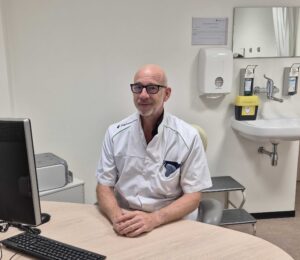
ConsultAssistent makes the conversation more personal and less stressful, because the basic information is already known in advance.
Digital Medical History Form for Breast Clinics
In the breast clinic, it is essential to combine medical information with personal context. Digital self-assessment forms provide this insight in advance. When breast cancer is suspected, the initial consultation is often decisive, but it can also be emotionally taxing. Because patients fill out their information in advance, less basic information needs to be gathered during the consultation.
Patients fill out information in advance regarding:
- Breast symptoms and abnormalities
- Medication use
- Hormone use and risk factors
- Family history
- Personal situation and presenting concern
This creates more time during the consultation to explain the diagnosis and test results, discuss treatment options, and engage in shared decision-making tailored to the patient.
The breast surgery care pathway
ConsultAssistent supports the care pathway before, during, and after the consultation.
Before the consultation
The patient completes the digital auto-anamnesis in advance based on their symptoms. This provides greater insight into the nature and severity of the symptoms even before the first consultation.

During the consultation
The surgeon has a structured overview of:
- Presenting concern
- Symptoms and abnormalities
- Medications and medical history
- Risk profile
This allows the consultation to focus directly on explanations, next steps, and treatment options. In addition to the structured medical report, a concise AI summary is also available in the EMR.

After the consultation
Personalized follow-up and breast cancer outcome measures can be used to monitor symptoms and treatments, either in combination with outpatient follow-up visits or on their own. In addition, the outcome measures can be clearly displayed in dashboards.

Curious about how this works at your breast clinic?
Request a demo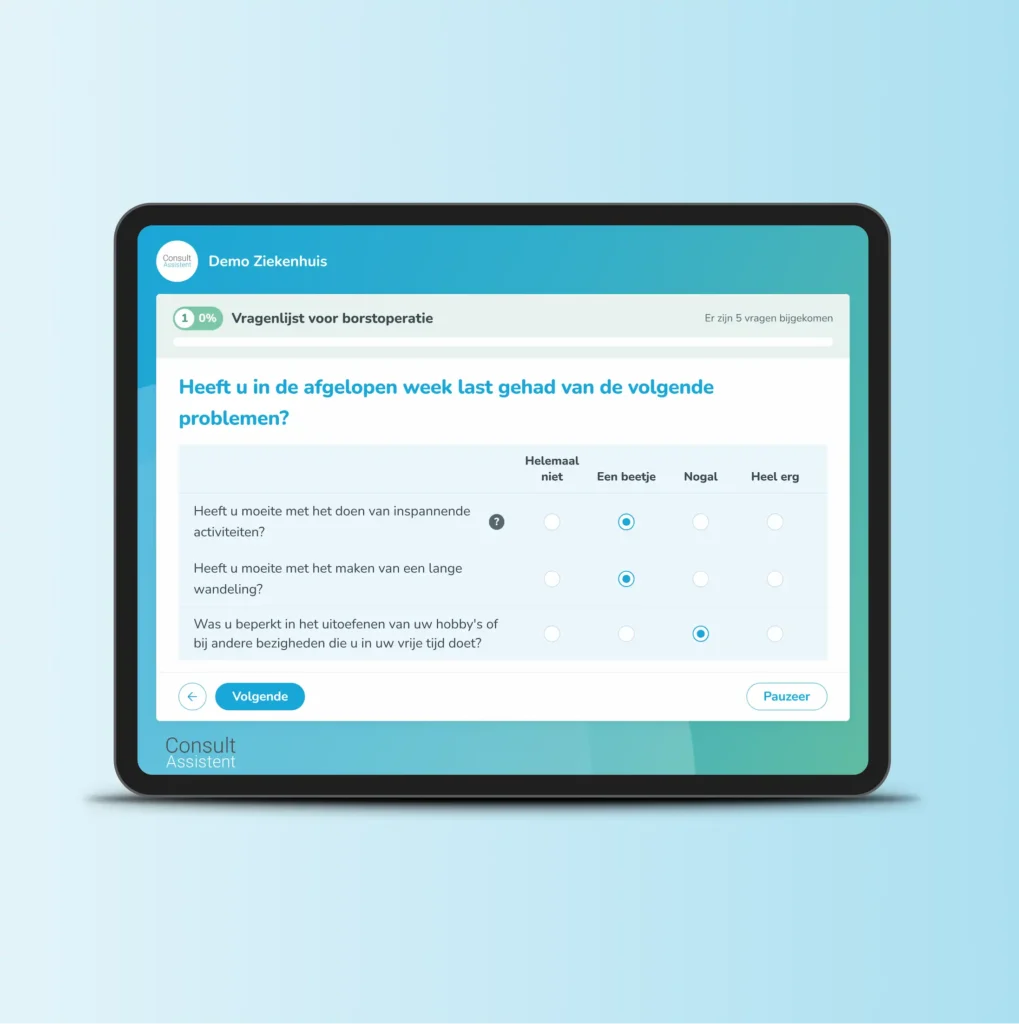
PROMs and outcome measures at the breast clinic
The breast module includes, among others:
- Breast-Q
- MiniPROMs
- PROMs for breast tumors
Is your preferred PROM questionnaire not listed here? If so, we can easily add it. The PROM questionnaires can be integrated into digital auto-anamnesis or the follow-up process, but they can also be sent separately at the right time—for example, before, during, and after treatments. This way, you'll always gather the right insights at the moments that really matter.
Better preparation for multidisciplinary team meeting (MDT)
The collected data is automatically processed into a structured report in the EPD.
This makes it possible to:
- Submit more complete files for MDO
- Requiring less manual preparation
- Get a quicker overview of patient data
- To achieve better coordination within the treatment team
Within the breast clinic, this contributes to more efficient preparation for multidisciplinary team (MDT) meetings, better collaboration, and evidence-based treatment decisions.
How does this benefit the breast clinic?
- Less stressful initial consultations
- More opportunities for explanation and guidance
- Better-prepared patients
- More complete files for MDT
- Less administrative burden
- More efficient consultations

FAQ about the breast clinic module
How does digital auto-anamnesis help with consultations at the breast clinic?
Patient information is collected in advance, allowing consultations to begin immediately with explanations and guidance rather than routine questions.
Is the digital auto-anamnesis suitable for patients with suspected breast cancer?
Yes, especially with this patient group, it helps to gather information in advance so that the consultation is less stressful.
How do digital questionnaire modules support multidisciplinary meetings (MDTs)?
Because data is available in a structured format, files can be reviewed more thoroughly and more quickly.
Which symptoms can be assessed digitally in the breast cancer module?
These include lumps, pain, nipple abnormalities, and abnormalities detected during screening. ConsultAssistent's breast self-assessment tool is suitable for the entire patient population.
How are PROMs used at the breast clinic?
PROMs are used to measure treatment outcomes and quality of life before, during, and/or after treatment.
Real-World Case Study
HagaZiekenhuis
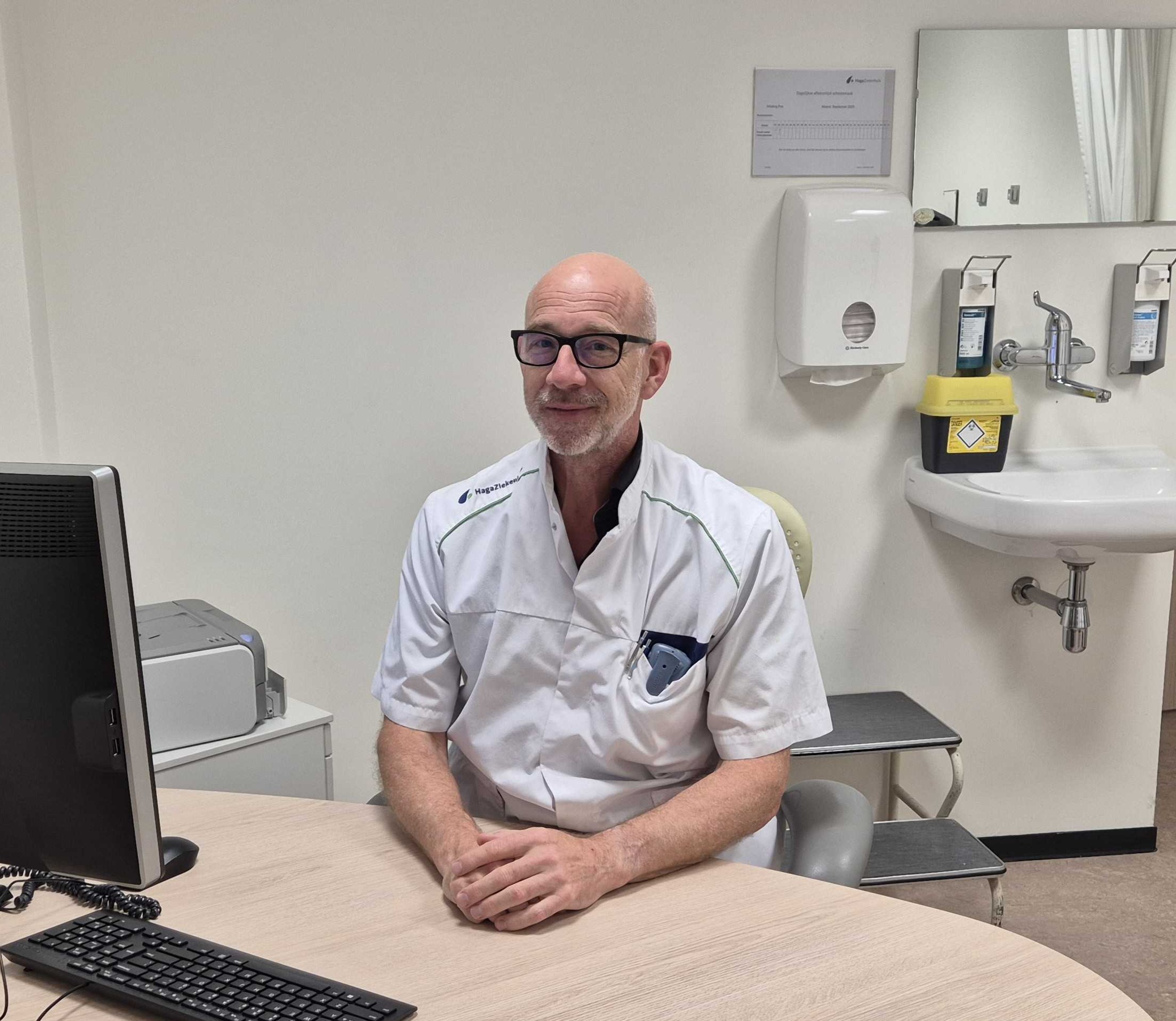
Dr. Jos Merkus – Surgical Oncologist: "The consultation becomes more personal and less stressful, because basic information—such as medical history and personal details—is already known in advance."

Situation
At the breast clinic, the initial consultation involves a vulnerable group of patients due to the suspicion of breast cancer. When bad news is delivered, patients often find they can only process part of the information. At the same time, during this initial consultation, basic information was still being gathered, such as medical history and personal details like the desire to have children and age. This could be perceived as an additional burden and limited the time available for support and explanation.
Configuration
The digital auto-anamnesis was designed for patients with suspected breast cancer. Prior to the consultation, patients fill out a structured form detailing their symptoms, medical history, medication use, and personal circumstances (such as family composition).
Experience
Patients arrive at their appointments better prepared, and doctors have a clear understanding in advance of the patients’ expectations, possible treatment options, and relevant background information. Because basic questions no longer need to be asked during the appointment, the conversation is perceived as less stressful. This creates space for a personal conversation, explanations, and shared decision-making.