From incomplete referral information to a well-prepared consultation
There are several systemic challenges within the ENT outpatient clinic
- Large influx of low-complexity complaints
- Variations in urgency are difficult to predict in advance
- Fragmented and heterogeneous referral information
- Consultation time is spent on routine questions
- Rising demand for care related to conditions such as sleep apnea, dizziness, and hearing loss
As a result, specialists' time is not being used optimally.
A higher-quality consultation with consultation preparation from ConsultAssistent
- Relevant patient information collected in advance
- Digital auto-anamnesis is standardized and structured
- The consultation begins with a complete picture
- Urgency and symptom profile more clearly identified
- Screenings can be conducted remotely
- Insight into the progress and effect of treatments
- Assessment criteria displayed
Learn more about ConsultAssistent's digital auto-anamnesis.
Initial complaints within the ENT module
The ENT digital auto-anamnesis is available to the entire patient population and supports, among other things:
Throat, mouth, and voice problems
- Sore throat (pharyngodynia)
- Swallowing difficulties and globus sensation
- Voice changes (dysphonia)
Nasal and sinus symptoms
- Nasal congestion and rhinitis
- Nosebleed (epistaxis)
- Loss of smell (anosmia)
Ear problems
- Hearing loss (hypacusis)
- Ear pain and a feeling of pressure
- Tinnitus
Other complaints
- Sleep apnea and snoring
- Dizziness (vertigo)
- Swelling in the neck
The questions asked are tailored based on previous answers, so that only relevant follow-up questions are asked.
Digital auto-anamnesis for ENT
In ENT medicine, there is a wide range of symptoms, and it is often difficult to assess the urgency of a case in advance. Digital auto-anamnesis helps to systematically map out this variation.
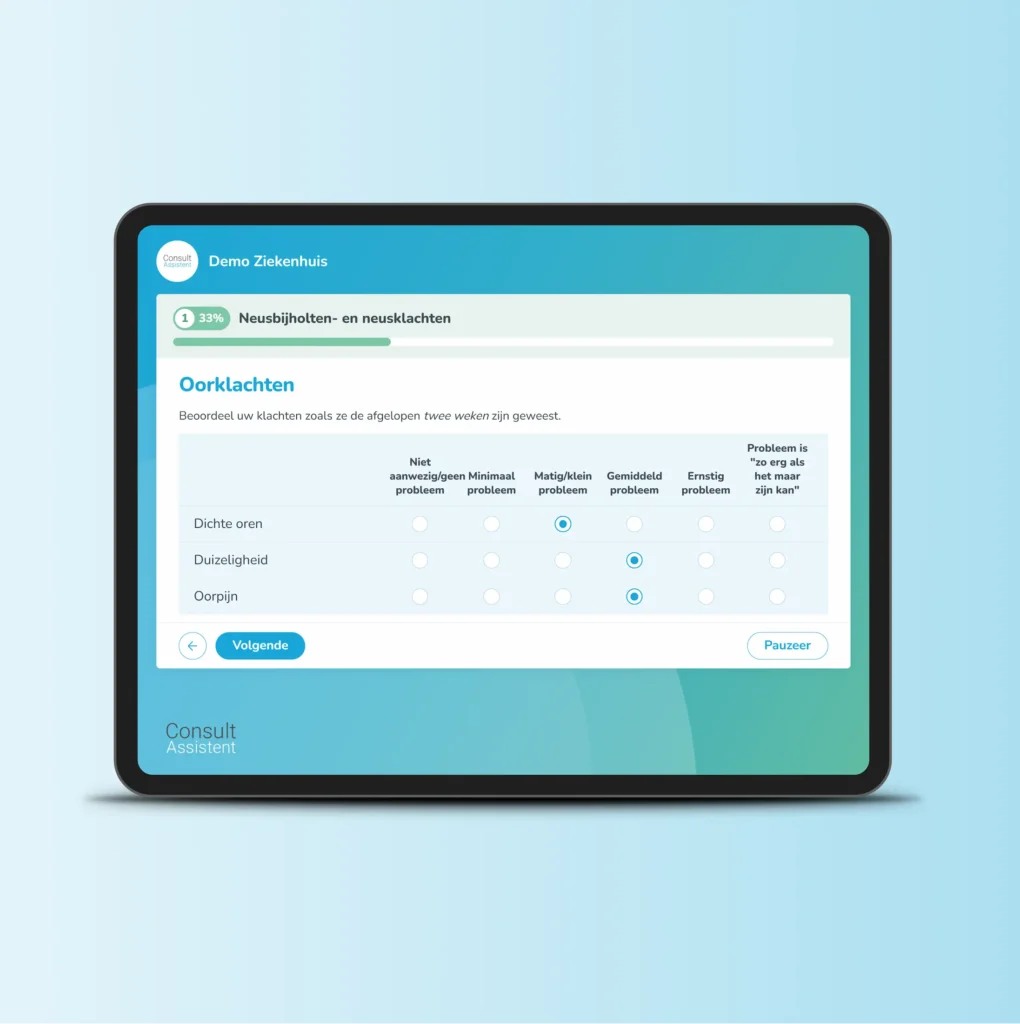
Patients enter information in advance—including measurements and numerical values—about their symptoms, such as hearing loss, tinnitus, or nasal congestion.
This provides a complete picture of the patient’s symptoms, the course of the illness, and any potential warning signs before the consultation. The information is automatically compiled into a structured report in the EMR, supplemented by a concise AI summary for a quick overview during the consultation.

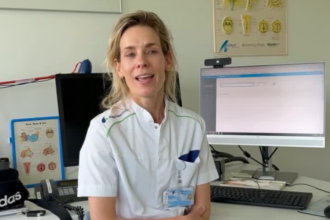
Since we started using ConsultAssistent, the way we conduct consultations has really changed. The most important information is available in advance, which allows me to get to the heart of the matter more quickly and gives me more time to talk with the patient.
The ENT care pathway
ConsultAssistent supports the care pathway before, during, and after the consultation.
1
Before the consultation
The patient completes the digital auto-anamnesis in advance based on their symptoms. This provides greater insight into the nature and severity of the symptoms even before the first consultation.

2
During the consultation
The structured report in the EMRprovides immediate insight into:
- Presenting concern
- Symptoms
- Medication
- Risk profile
In addition to the structured report in the EMR, a concise AI-generated medical summary is also available that can be used immediately during the consultation. This saves ENT specialists time and further reduces the administrative burden. Furthermore, it helps patients be better prepared for their consultation.
The healthcare provider reviews the AI summary and remains responsible for reporting and decision-making.

3
After the consultation
Personalized follow-up and ENT outcome measures can be used to monitor symptoms and treatments, either in combination with outpatient follow-up visits or on their own. In addition, the outcome measures can be clearly displayed in dashboards.

Curious to know how this works in your ENT practice?
Request a demoVarious screening modules
The ENT module supports collaborative consultation, for example, in the following remote screenings:
- Teleconsult ear screen
- NPTC OSA
- Laser tonsillotomy
- Teleconsultation from a dentist to an ENT specialist
- Vertigo: off to the physical therapist
These modules can be tailored to the specific care pathway.
PROMs and outcome measures in ENT
Various PROM questionnaires are available within the ENT module, including:
- Epworth Sleepiness Scale (ESS)
- Holland Sleep Disorders Questionnaire (HSDQ)
- NoseScale
- SNOT-22
- Tinnitus Handicap Inventory (THI)
- Voice Handicap Index (VHI)
- Measurement of Quality of Life (EQ-5D)
Is your preferred PROM questionnaire not listed here? If so, we can easily add it. The PROM questionnaires can be integrated into digital auto-anamnesis or the follow-up process, but they can also be sent separately at the right time—for example, before, during, and after treatments. This way, you'll always gather the right insights at the moments that really matter.
Insights into patient data to support decision-making
The collected data is automatically processed in:
- A structured medical report in the EMR
- A dashboard providing insight into symptoms and outcomes
This makes it possible to track the progression of symptoms over time and identify differences between patient groups. It also allows for better coordination of treatment and follow-up. Within the ENT department, this contributes to a better understanding of symptom patterns and the effectiveness of treatment. This helps to better organize patient flows and use capacity within the ENT clinic more efficiently.
How does this benefit the ENT practice?
- Spend less time on routine questions
- More efficient consultations
- Better insight into urgency and symptom profiles
- Less variation in intake
- Use follow-up appointments in a more targeted way
- Better use of specialists' time
- Ability to systematically track outcomes

FAQ about the ENT module
How does digital auto-anamnesis help with ENT consultations?
Digital auto-anamnesis ensures that symptoms, medications, and medical history are collected in advance. As a result, the consultation begins with a complete overview, and less time is needed for routine questions. Patients enter the exam room with a clearer sense of structure, and the consultation gets to the heart of the matter more quickly.
Which ENT symptoms can be assessed digitally?
The auto-anamnesis supports over 30 different presenting symptoms, including hearing loss, tinnitus, nasal symptoms, sore throat, dizziness, and sleep apnea. The questions adapt based on the symptom and the patient.
How is the information used during the consultation?
The responses are automatically compiled into a structured report in the EMR. In addition, a summary is available that can be used immediately during the consultation.
How are PROMs used in ENT?
PROMs are used to measure symptoms and outcomes before, during, and/or after treatment, or can be integrated into digital auto-anamnesis or follow-up. Examples include the SNOT-22, THI, and VHI.
Can digital auto-anamnesis help with triage in ENT?
Yes, because symptoms and risk factors are assessed in advance, this provides a better understanding of the urgency of the case and the patient's profile. This supports triage and the scheduling of appointments.
Related posts
Get in touch
Curious about how ConsultAssistent can help with consultation preparation in your ENT department? Give us a call or send us an email. We’d be happy to work with you to develop your care pathway and workflow.