From subjective symptoms to objective insights
Practice at the traumatology outpatient clinic
There are several challenges in the field of traumatology:
- Insufficient structure in the preliminary anamnesis
- Subjective description of mobility and function
- Many follow-up visits
- Limited monitoring of recovery due to high workload
- Many informal caregivers are involved
This makes it difficult to get a clear picture of the injury and the recovery process in advance.
Digital auto-anamnesis with ConsultAssistent
Faster insight into symptoms, functional capacity, and mobility limitations:
- Symptoms and function established in advance
- Consistent and structured reporting
- Mobility is visualized
- Less interpretation during the consultation
- A better understanding of recovery and physical capacity
Learn more about ConsultAssistent's digital auto-anamnesis.
Initial complaints within the traumatology module
The traumatology auto-anamnesis is available to the entire patient population and supports, among other things, symptoms related to:
- Shoulder
- Elbow
- Wrist and hand
- Hip
- Knee
- Ankle and foot
- Torso and head
- Thoracic injuries and deformities (in development)
The question structure is tailored to each symptom and patient profile.
Digital auto-anamnesis for traumatology
In the field of traumatology, it is essential to link symptoms to functional limitations and recovery; however, this is often described based on subjective information. Digital auto-anamnesis provides insight into this in advance.
Patients provide information about:
- Symptoms and injuries
- Medication use
- History of trauma
- Pain score (VAS)
- Mobility and range of motion
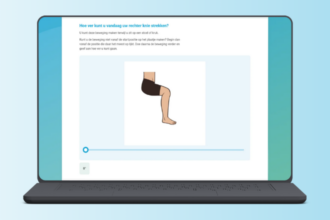
What makes this unique is that patients use interactive visual prompts to describe their range of motion. This provides a concrete picture of their functional ability and exercise capacity even before the consultation.
The data is automatically processed into a structured report in the EMR. In addition, a medical AI summary ready for consultation is available. The healthcare provider reviews the AI summary and remains responsible for reporting and decision-making. By systematically recording mobility and pain scores, a more objective picture of the recovery process emerges. This makes it possible to better track changes in function and adjust treatment accordingly.
The trauma care pathway
ConsultAssistent supports the care pathway before, during, and after the consultation.
1
Before the consultation
The patient completes the digital auto-anamnesis based on the selected reason for referral. Mobility and symptoms are recorded in a structured manner, including visual input.

2
During the consultation
The surgeon has an overview of:
- Symptoms and their progression
- Pain score
- Mobility and range of motion
- Risk factors
The visual representation of movement reduces the need for interpretation and ensures consistent evaluation.

3
After the consultation
Follow-up and outcome measurements are used to monitor recovery and treatment, for example, after an injury or surgery.

Curious to know how this works at your trauma clinic?
Request a demoFrom follow-up visits to targeted monitoring
The collected data is automatically processed into a structured report in the EMR. In addition, a medical summary ready for consultation is generated using AI.
This makes it possible to:
- Monitoring recovery progress over time
- Monitoring the effect of treatment
- Assessing the need for in-person follow-up visits
- Monitoring patients in a targeted manner
- Organizing aftercare more efficiently
In the field of traumatology, this helps reduce the burden on follow-up visits and provides better support for recovery.
PROMs and outcome measures in traumatology
The traumatology module includes, among others:
- Michigan Hand Questionnaire (MHQ)
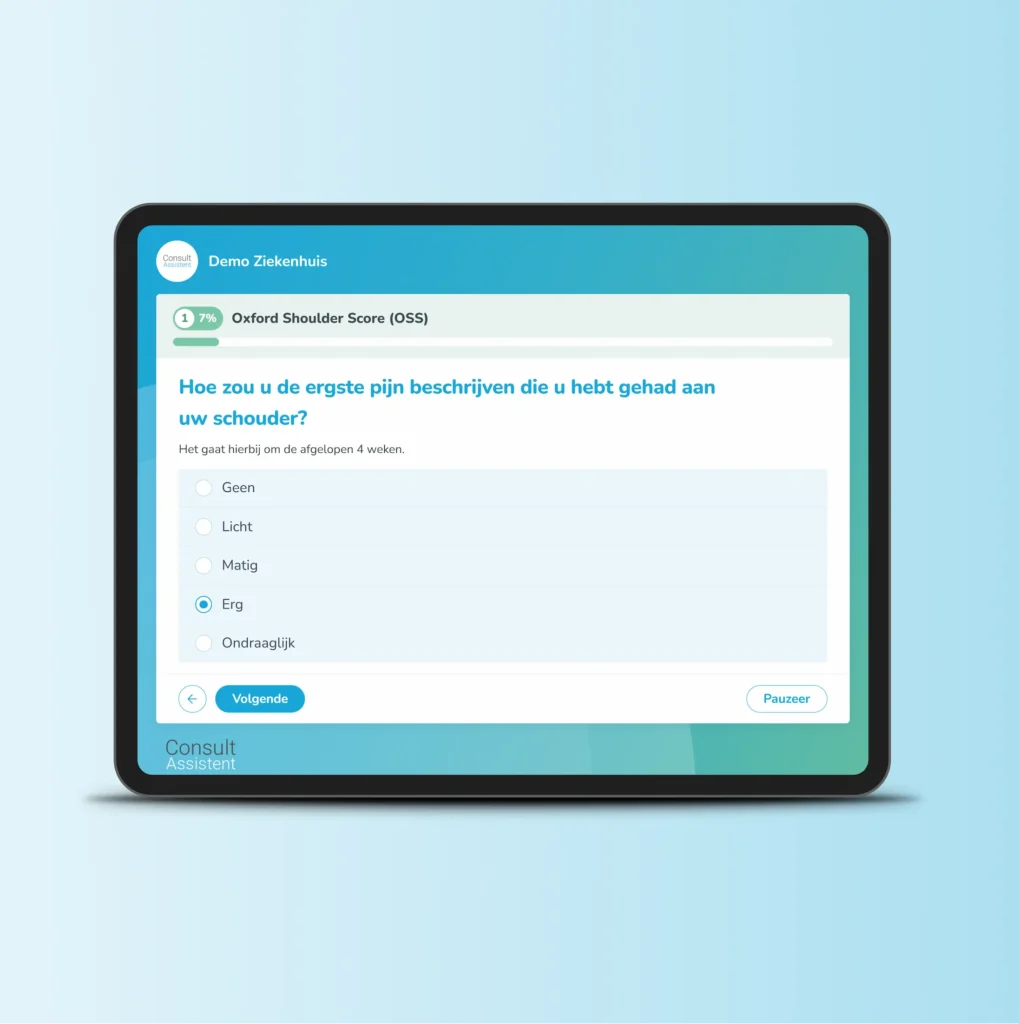
- Oxford Shoulder Score
- PROMIS
Is your preferred PROM questionnaire not listed here? If so, we can easily add it. The PROM questionnaires can be integrated into digital auto-anamnesis or the follow-up process, but they can also be sent separately at the right time—for example, before, during, and after treatments. This way, you'll always gather the right insights at the moments that really matter.
How does this benefit the field of traumatology?
- A better understanding of mobility before the consultation
- Less interpretation of symptoms
- More efficient consultations
- Better monitoring of recovery
- Using follow-up appointments more effectively
- A better understanding of physical capacity

FAQ about the traumatology module
Which symptoms can be assessed digitally in the traumatology module?
These include knee, hip, and shoulder problems, such as pain, limited range of motion, and functional capacity.
How does digital auto-anamnesis help with trauma consultations?
Patient information is collected in advance, which reduces the time needed for questioning and allows the consultation to focus directly on assessment and treatment.
How does digital follow-up provide insight into recovery?
By recording symptoms, functioning, and recovery at agreed times, the healthcare provider can see how recovery is progressing and what results the treatment is producing.
Related posts
Get in touch
Curious about how ConsultAssistent can help with consultation preparation in your trauma department? Give us a call or send us an email. We’d be happy to work with you to develop your care pathway and workflow.